Custom Upcycled Corporate Gifts Made in the Philippines
Project Pilipinas works with community makers to develop practical corporate gifts from selected recovered textiles, including approved client-supplied uniforms, fabric scraps, deadstock, and Project Payatas materials.
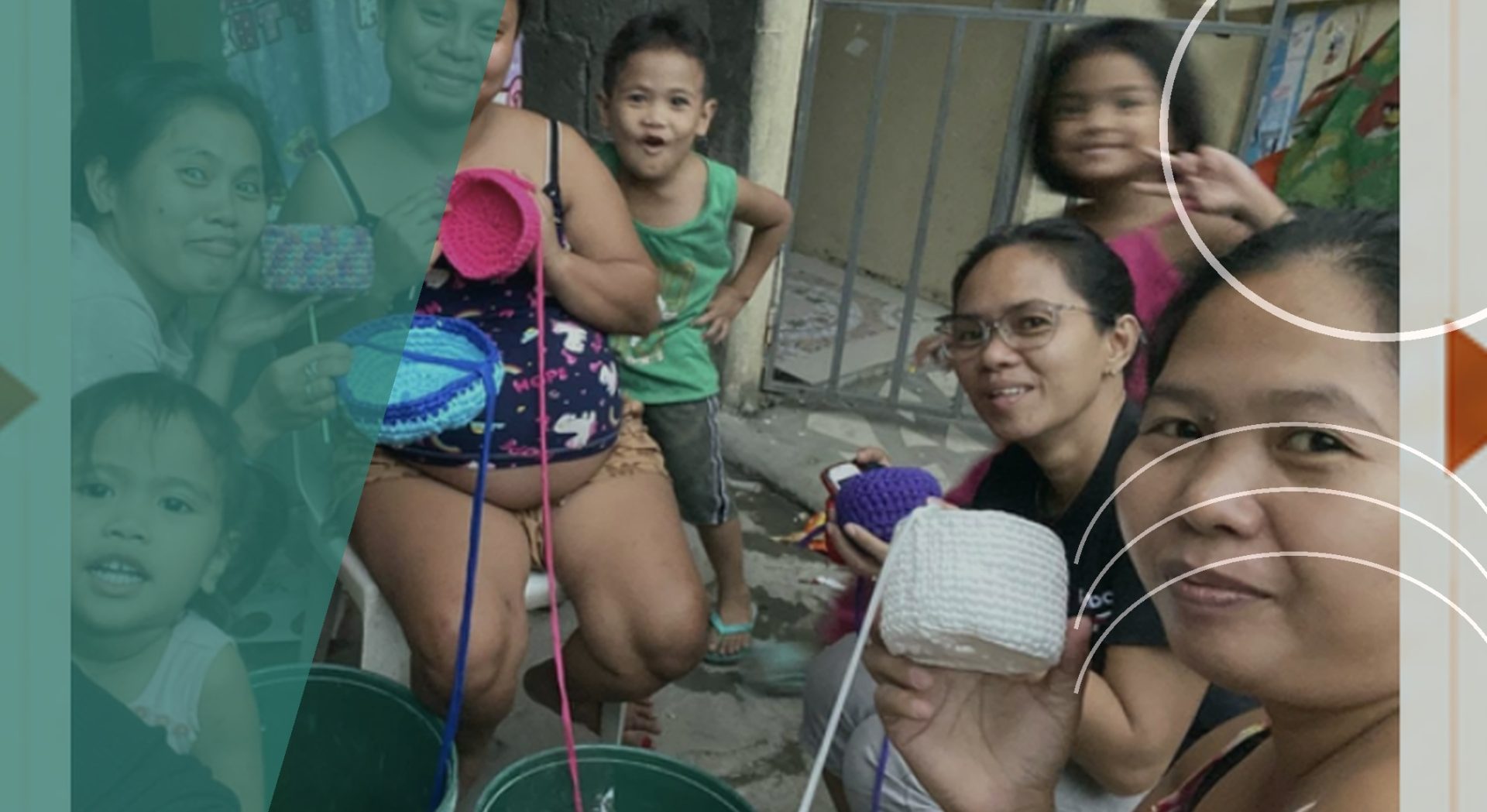
Two ways to create an upcycled corporate gift
Corporate gifts can do more than carry a logo. When the material and process are documented, an order can connect textile recovery, local production, useful design, and livelihood. The strongest projects begin with a clear recipient, quantity, deadline, budget, product purpose, and material story.
Project Pilipinas offers two possible approaches. A partner may order products from available Project Payatas and Project Pilipinas materials, or request an assessment of the partner’s own uniforms, offcuts, deadstock, curtains, or other clean textiles. Client-supplied material does not automatically guarantee that every product can be made from that textile.
Choose the right project model
The right approach depends on whether the priority is product availability, use of the client’s own textiles, customization, or a repeat program.
Order from available materials
Select a suitable existing product and customize quantity, label, packaging, message card, or approved branding. Availability depends on current material and maker capacity.
Transform your own textiles
Submit the client material for assessment and develop a sample that demonstrates how the recovered textile can be incorporated safely and consistently.
Create an event or employee kit
Combine selected upcycled products with impact information, care guidance, and a concise explanation of the recovered material and community production.
Develop a longer-term product line
For repeat textile streams, Project Pilipinas can explore standard patterns, material specifications, production planning, quality controls, and recurring orders.
Product categories and material considerations
Product selection follows the textile and intended use. Not every recovered fabric is suitable for every design.
| Product category | Potential textile inputs | Key design considerations |
|---|---|---|
| Tote bags and reusable carriers | Uniform panels, woven fabric, curtains, deadstock, and larger clean offcuts | Load strength, handles, lining, logo placement, seam allowance, consistent dimensions, and intended use. |
| Pouches and organizers | Smaller uniform panels, offcuts, sample garments, and mixed coordinated textiles | Zipper quality, lining, usable piece size, color variation, label placement, and production consistency. |
| Laptop and tablet sleeves | Durable outer fabric combined with padding, lining, and closure materials | Device dimensions, impact protection, material thickness, stitching, closure, and quality testing. |
| Aprons and work accessories | Curtains, woven uniforms, sacks, katsa, and durable fabric panels | Washability, strap strength, fit range, pocket location, heat exposure, and workplace suitability. |
| Mats and home products | Fabric strips, selected scraps, and textile combinations suitable for weaving or assembly | Color mix, washing, weight, edge finishing, non-slip requirements, and variation between pieces. |
| Bottle sleeves, coasters, and small gifts | Small clean offcuts and coordinated material sets | Minimum usable dimensions, absorbency, padding, finishing, packaging, and volume efficiency. |
| Custom event sets | Combination of approved products and packaging components | Recipient profile, event date, message, bundle assembly, transport volume, and replacement allowance. |
How a custom corporate order works
Define the recipients and purpose
Identify whether the gifts are for employees, clients, speakers, volunteers, event participants, partners, or a sustainability campaign.
Provide quantity, budget, and deadline
A realistic proposal depends on the required number of units, target cost range, delivery location, sample deadline, and final event date.
Select or assess the textile
Choose from available materials or submit photographs and a sample of client-supplied fabric for condition, size, strength, and branding review.
Develop a product recommendation
Project Pilipinas proposes products that fit the textile, production tools, maker skills, recipient needs, and available supporting components.
Approve a physical sample
The partner reviews dimensions, material variation, recovered-content description, branding, label, packaging, workmanship, and function.
Confirm production terms
Finalize approved quantity, price, payment schedule, production lead time, allowable variation, packaging, delivery, and quality-control process.
Produce and inspect
Community makers complete assigned work, while production coordinators check measurements, seams, attachments, cleanliness, labeling, and packaging.
Deliver and report
The partner receives the products with agreed documentation on materials, production, community participation, payments, and limitations.
Customization and approval requirements
| Customization item | Possible options | Approval requirement |
|---|---|---|
| Brand identification | Fabric label, wooden tag, printed insert, embroidery, patch, or approved use of existing textile branding | Provide artwork, permitted colors, placement, dimensions, and written authorization. |
| Product dimensions | Standard pattern, device-specific size, gift-set dimensions, or approved custom measurements | A physical sample or written dimensional approval is required before bulk production. |
| Packaging | Paper sleeve, recycled-paper card, reusable pouch, box supplied by the client, or minimal bulk packing | Confirm sustainability claims, printing, assembly, protection, and delivery requirements. |
| Impact message | Material source, community production story, care instructions, limitations, and verified project figures | All claims must reflect measured project data and approved community references. |
| Color and pattern | Available textile mix, selected color family, client-supplied fabric, or intentionally varied pieces | Recovered textiles may create natural variation. The acceptable range should be documented. |
| Recipient personalization | Name tag, department grouping, event category, or numbered allocation | Provide complete and final data securely before production and allow additional lead time. |
Procurement and quality checklist
Information to include in an inquiry
- Product or use case
- Quantity
- Budget range
- Sample deadline
- Final delivery date and location
- Branding and packaging needs
- Whether textiles will be supplied by the client
Information to request in a quotation
- Unit price and taxes
- Sample or development cost
- Included and excluded materials
- Payment schedule
- Production lead time
- Delivery cost
- Replacement and rejection terms
Quality-control points
- Approved dimensions
- Seam and attachment strength
- Closure function
- Cleanliness and odor
- Logo placement
- Packaging completeness
- Acceptable recovered-material variation
Impact-reporting points
- Material received and used
- Supporting material disclosed
- Units completed
- Production rejects
- Gross community payments
- Residual material
- Method and data limitations
Quality, consistency, and recovered-material variation
Recovered textile is not a uniform raw material. Fabric panels may vary in shade, wear, weave, thickness, stretch, print placement, and usable area. These differences can become part of the product story, but the acceptable level of variation must be clear before bulk production.
Quality is managed through an approved sample, a written specification, maker instructions, in-process checks, final inspection, and an agreed replacement or rejection policy. A sustainability story should not be used to excuse poor function or inconsistent workmanship.
What an order impact summary can include
| Report element | Useful record | Why it matters |
|---|---|---|
| Recovered textile source | Partner, textile type, date received, and material condition | Connects the product to a documented material stream. |
| Material use | Weight or amount used in approved production, with the method stated | Separates actual use from total material collected. |
| Supporting components | Lining, zippers, thread, handles, labels, packaging, reinforcement, and hardware | Prevents the recovered-content story from overstating product composition. |
| Production output | Approved quantity, completed quantity, rejected units, replacements, and delivery quantity | Shows whether the project fulfilled the agreed order. |
| Community production | Maker group, work completed, production period, and gross production payments | Links the order to documented livelihood activity without claiming unmeasured household outcomes. |
| Residual material | Unused panels, cutting scraps, rejected components, and their next status | Ensures that waste remaining after production is visible. |
| Data limitations | Estimates, missing weights, mixed materials, unverified destinations, and reporting boundary | Makes the impact statement more credible and usable. |
Corporate gift questions
Product availability, minimum quantities, and production timing depend on the chosen design and material.
Potentially. Project Pilipinas first assesses the uniform condition, usable dimensions, branding, material strength, quantity, product suitability, supporting components, and production deadline. A sample must be approved before bulk production.
Minimum quantity varies by product, textile, customization, material availability, and production setup. A proposal is prepared after the required quantity and timeline are known.
Pricing depends on design, quantity, labor, material preparation, supporting components, branding, packaging, sample development, quality control, transport, and reporting. A generic price cannot accurately represent every recovered-textile project.
Not always. Recovered textiles can create visible variation. The approved sample and specification should define which differences are acceptable and which require correction or replacement.
Yes, subject to artwork quality, authorization, placement, production method, material behavior, cost, and sample approval. Logo options may include labels, tags, inserts, patches, or embroidery.
Yes. The card can explain material source, community production, care instructions, and verified figures. Claims are finalized only after production data is available.
Lead time includes assessment, design, quotation, material preparation, sample creation, approval, procurement, community scheduling, production, quality control, packaging, and delivery. Share the event date as early as possible.
Delivery may be arranged subject to product volume, destination, courier suitability, packaging, delivery cost, and timeline. Provincial delivery should be included in the proposal.
Related Project Pilipinas resources
Create a useful gift with a documented material story
Provide the quantity, recipient, budget range, event date, delivery location, preferred product, branding needs, and details of any client-supplied textile.