Corporate Textile Waste Collection and Recovery in the Philippines
Project Pilipinas helps companies and institutions assess textile waste streams, plan collection, prioritize reuse and community upcycling, document material movement, and report outcomes without overstating what has been recovered.
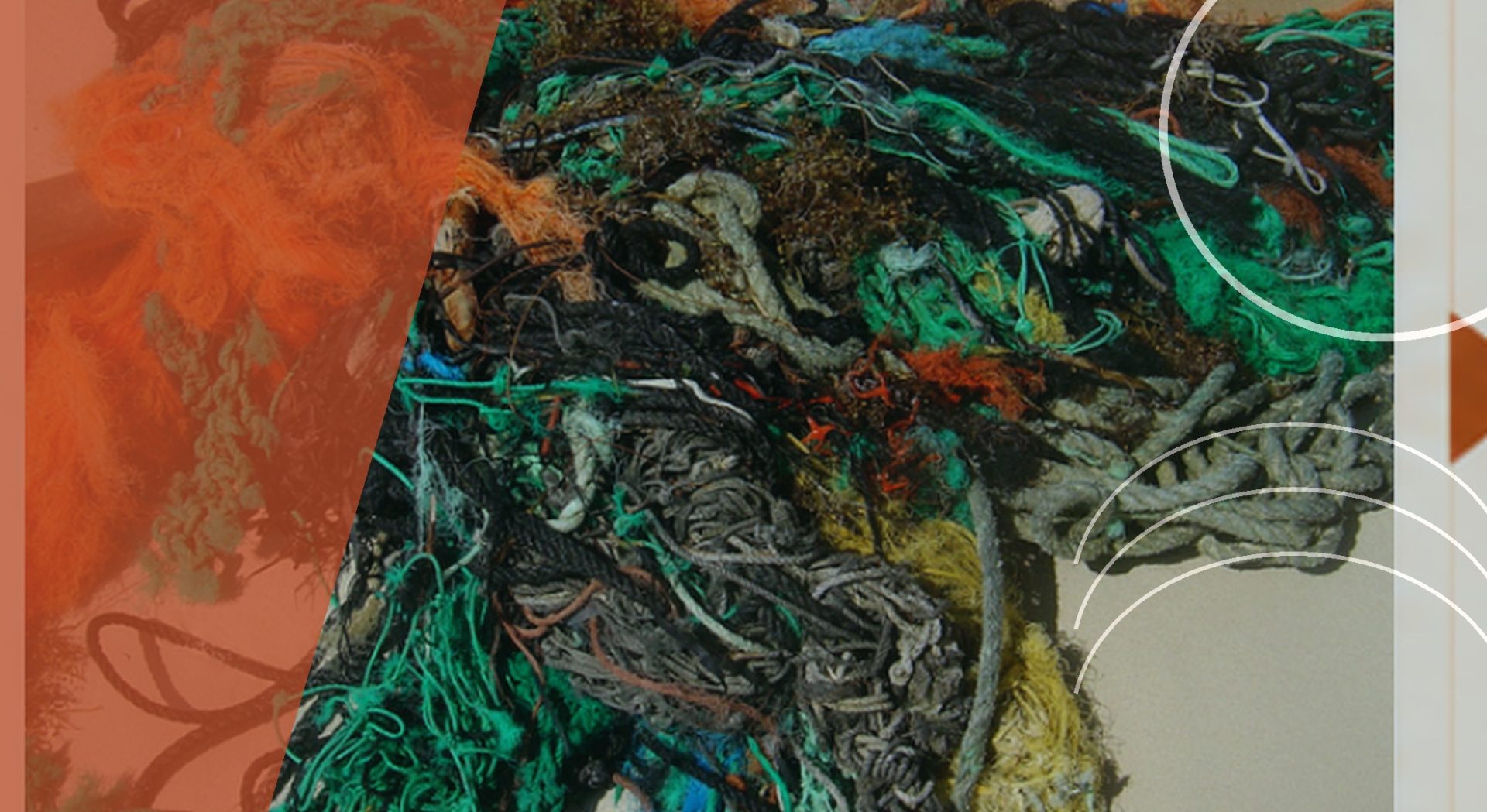
Start with the textile stream, not a recycling promise
Corporate textile waste is broader than old clothing. Offices, schools, hotels, hospitals, retailers, manufacturers, events, and property managers may generate uniforms, curtains, linens, sample garments, deadstock, damaged products, promotional shirts, fabric offcuts, and mixed textile accessories.
The correct recovery pathway depends on what the material is, how it was used, whether it is clean, how much is available, whether branding or confidentiality is involved, and whether a reliable next use already exists. Project Pilipinas starts with a textile-stream assessment instead of promising that every item will be recycled.
Organizations this service is designed for
Different sectors generate different materials, risks, schedules, and reporting needs. The recovery plan should reflect the actual source.
Offices and corporate campuses
Uniforms, event shirts, curtains, promotional textiles, damaged bags, and selected fabric-based office materials.
Hotels and hospitality
Staff uniforms, curtains, clean linens, table textiles, selected upholstery offcuts, and retired branded fabric items.
Schools and institutions
School uniforms, event shirts, curtains, costumes, banners made from fabric, and materials from organized campus drives.
Retailers and garment businesses
Deadstock, customer returns, samples, defective pieces, clean cutting scraps, and selected packaging textiles.
Manufacturers and suppliers
Production offcuts, rejected components, clean rolls, workwear, and repeat textile streams that may support scheduled recovery.
LGUs and development partners
Community collection pilots, livelihood-linked material programs, local education, and documented recovery partnerships.
Common corporate textile streams
This table helps organizations prepare the information needed for an initial assessment.
| Textile stream | Information needed | Possible initial pathway |
|---|---|---|
| Corporate uniforms | Quantity or weight, fabric type, logo risk, condition, location, deadline | Secure sorting, selected redesign, community upcycling, approved product development, or specialist referral. |
| Hotel linens and curtains | Cleanliness, stains, dimensions, fiber content, treatment history | Direct reuse where appropriate, cutting into product components, cleaning requirement, or rejection. |
| Factory offcuts | Material composition, average piece size, color consistency, monthly volume | Recurring community production, stuffing or filling trials, sample development, or material research. |
| Retail deadstock and returns | Ownership, resale restrictions, labels, damage, seasonality, branding | Approved resale or donation referral, redesign, upcycling, de-branding, or controlled exclusion. |
| Event shirts and promotional textiles | Collection source, garment count, artwork permission, condition | Product conversion, repair, donation referral, or sorting for another confirmed use. |
| Mixed textile drives | Collection rules, organizer capacity, sorting plan, prohibited items | Pre-sorted intake only, limited pilot, community education, or postponement until a pathway is available. |
| Contaminated or hazardous material | Source, exposure, treatment, applicable safety rules | Normally excluded from community collection and referred to an appropriate specialist. |
How corporate textile recovery works
The process creates a documented chain from material owner to sorting, destination, production, and residual handling.
Define the objective
Clarify whether the priority is disposal risk, landfill reduction, community livelihood, customized products, reporting, or a combination of outcomes.
Map the textile stream
Identify material type, source, quantity, frequency, storage, condition, fiber composition when known, and attachments such as zippers or logos.
Assess operational feasibility
Review collection distance, loading access, packaging, transport, sorting labor, storage space, production demand, and available partner capacity.
Approve an acceptance plan
Document what is accepted, excluded, returned, held, or transferred, together with any contamination and branding requirements.
Collect or receive materials
Use an agreed pickup, delivery, consolidation, or drop-off method. Materials should be clean, dry, packaged, and labeled by stream.
Record and sort
Log source, date, weight or count, material condition, sorting result, intended destination, and any unresolved items.
Route materials responsibly
Prioritize direct reuse, repair, redesign, community upcycling, approved product orders, or a documented material-processing pathway.
Report confirmed outcomes
Separate collected weight from used weight, products completed, community payments, residuals, and materials still awaiting a pathway.
A reuse-first recovery hierarchy
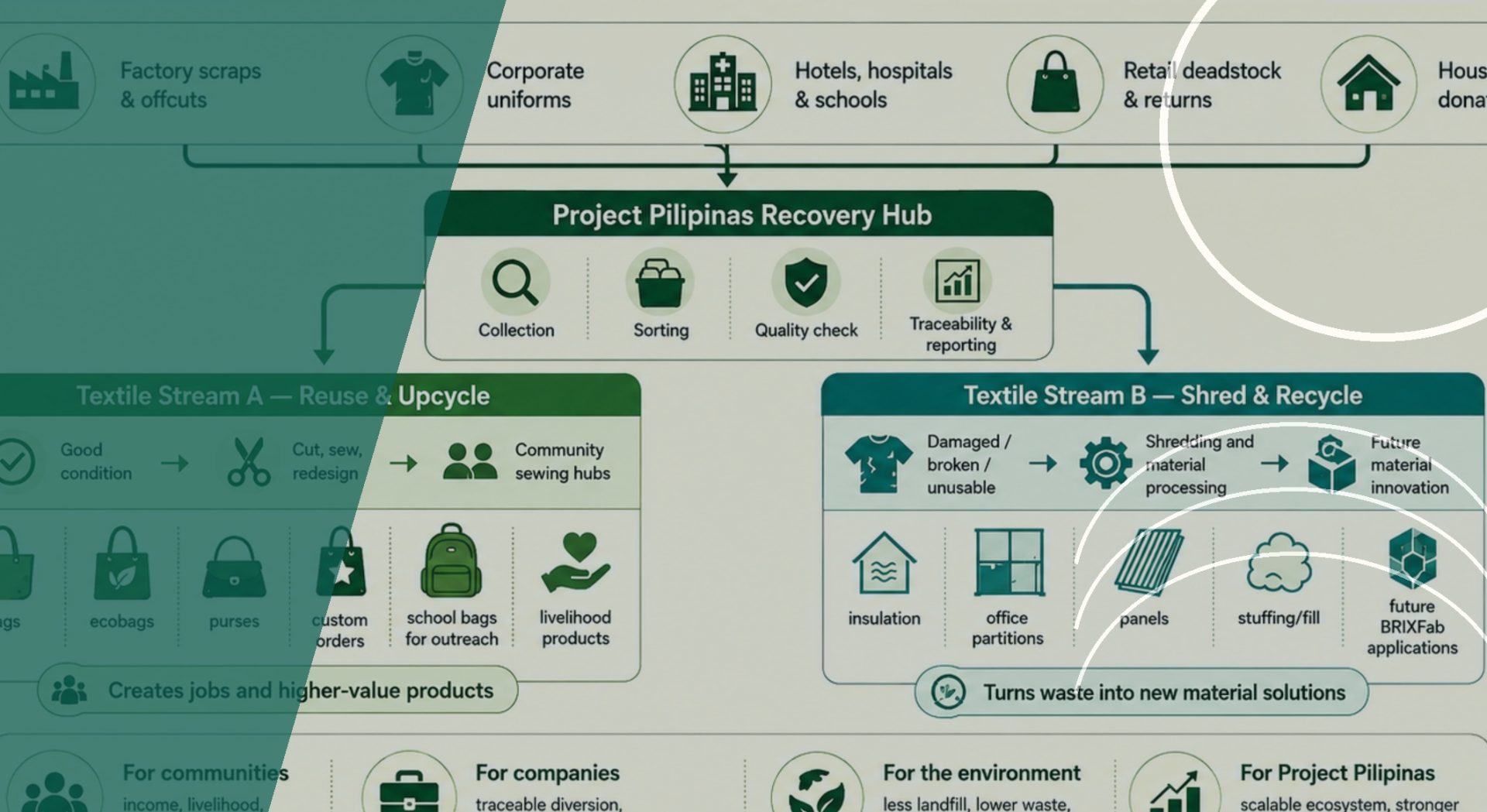
Project Pilipinas uses a reuse-first hierarchy because collection does not automatically create environmental value. An item that can be repaired, redistributed, or converted into a useful product may retain more material value than an item that is prematurely shredded.
Community upcycling also has practical limits. Makers need suitable dimensions, consistent quality, tested product patterns, equipment, supporting materials, sufficient lead time, quality control, and real buyer demand. Material should not be pushed into production merely to clear storage.
Four possible pathway categories
Reuse and redistribution
Where suitable and permitted, a textile may retain more value through continued use, repair, or responsible redistribution than through processing.
Community upcycling
Selected material can be transformed into useful products when dimensions, quality, market demand, equipment, and maker skills align.
Material processing
Damaged textiles may require shredding, opening, carding, nonwoven production, composite development, or another technical route that Project Pilipinas does not yet claim as a universal in-house capability.
Responsible residual handling
Material without a verified route remains a residual. It should be returned, referred, stored only under an agreed plan, or excluded before collection.
What a credible recovery report can show
Useful reporting explains both achievements and limitations. It distinguishes activity from verified outcomes.
| Metric | What may be reported | What should not be implied |
|---|---|---|
| Material intake | Date, partner, textile type, weight or count, and storage condition | Intake alone is not verified diversion. |
| Sorting result | Reusable, repairable, upcyclable, technical pathway, residual, rejected, or returned | A sorting label is not proof that downstream processing occurred. |
| Destination | Community group, product order, redistribution partner, research trial, or other documented recipient | A planned destination should not be reported as completed. |
| Product output | Approved quantity, completed quantity, quality-control result, and material contribution | Do not claim a product is 100 percent recycled unless its full material composition supports the claim. |
| Community livelihood | Gross production payment, work period, maker group, and completed work | Participation does not automatically mean increased net income or long-term employment. |
| Residual material | Weight or count remaining after sorting and production | Residuals must not disappear from the report or be described as recycled without evidence. |
| Project limitation | Unavailable data, estimation method, unprocessed inventory, rejected material, and reporting boundary | Transparent limitations strengthen the report and reduce misleading ESG claims. |
How partners can prepare
Before requesting collection
- Take clear photographs of representative materials.
- Estimate weight or count by textile type.
- Separate clean textiles from damaged or contaminated items.
- Identify branding and confidentiality concerns.
- Confirm the storage and loading location.
Before launching an employee drive
- Obtain written acceptance criteria.
- Publish a prohibited-material list.
- Assign an internal coordinator.
- Provide dry, labeled containers.
- Plan what happens when the collection reaches capacity.
Before requesting customized products
- Provide quantity and deadline.
- State the intended recipients.
- Confirm branding and packaging needs.
- Budget for new supporting components.
- Allow time for sampling and approval.
Before publishing impact claims
- Confirm the reporting period.
- Use measured rather than estimated weight where possible.
- Separate collected, used, and residual material.
- State data limitations.
- Obtain permission before naming community partners.
Corporate textile recovery questions
The answers below reflect Project Pilipinas’ current pilot-stage operating model.
No. Acceptance depends on condition, contamination, material composition, volume, location, branding, storage, available production demand, and a confirmed recovery pathway.
Not automatically. A project may involve transport, loading, sorting, storage, de-branding, sample development, reporting, and project-management costs. The quotation depends on the scope.
Project Pilipinas can agree on a practical recovery report. It may include material intake, sorting, destinations, products, community production, payments, residuals, and limitations. It is not a substitute for independent assurance or a full corporate ESG report.
Some damaged textiles may be suitable for technical processing, but not every fiber blend or contaminated item has an available local pathway. Project Pilipinas records the actual route and does not count planned or unavailable processing as completed recycling.
A recurring schedule may be possible for consistent, clean, well-characterized textile streams with sufficient volume, storage, transport, and demand. A pilot collection is normally needed before a repeat arrangement.
Requests may be assessed, but transport and implementation depend on distance, consolidated volume, partner-funded logistics, local collaborators, and available destination capacity.
Contact Project Pilipinas with photographs, material type, estimated quantity or weight, condition, location, deadline, branding concerns, and desired outcome. Do not send materials until written acceptance and delivery instructions are provided.
Related Project Pilipinas resources
Build a documented textile recovery plan
Share the textile type, approximate quantity or weight, location, condition, frequency, branding concerns, deadline, and desired result.