Project Pilipinas is developing an end-to-end textile recovery system for companies, institutions, communities, and buyers. Services are structured around reuse first, community value creation, responsible handling, traceability, and future material innovation.
Circular textile services for partners and communities
Each textile stream requires a different approach. We assess the material, partner need, volume, security requirements, recovery options, and potential community or environmental value before defining the pathway.
One system, connected pathways
Partner Textile Recovery Service
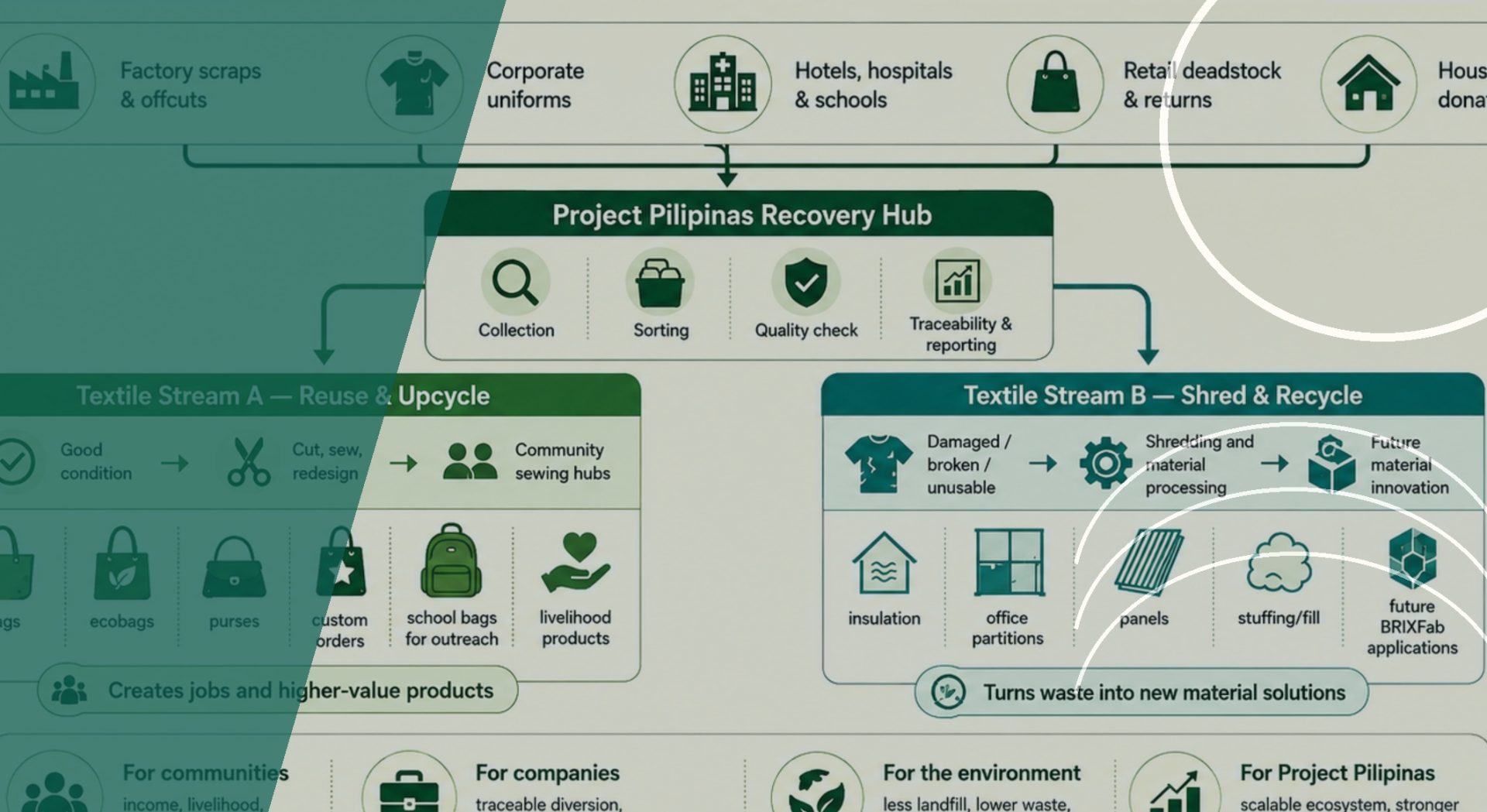
We support partner onboarding, textile-stream assessment, collection planning, secure handling, sorting, reuse-first routing, and impact reporting. The service is intended for brands, offices, schools, hotels, hospitals, manufacturers, LGUs, and other institutions.
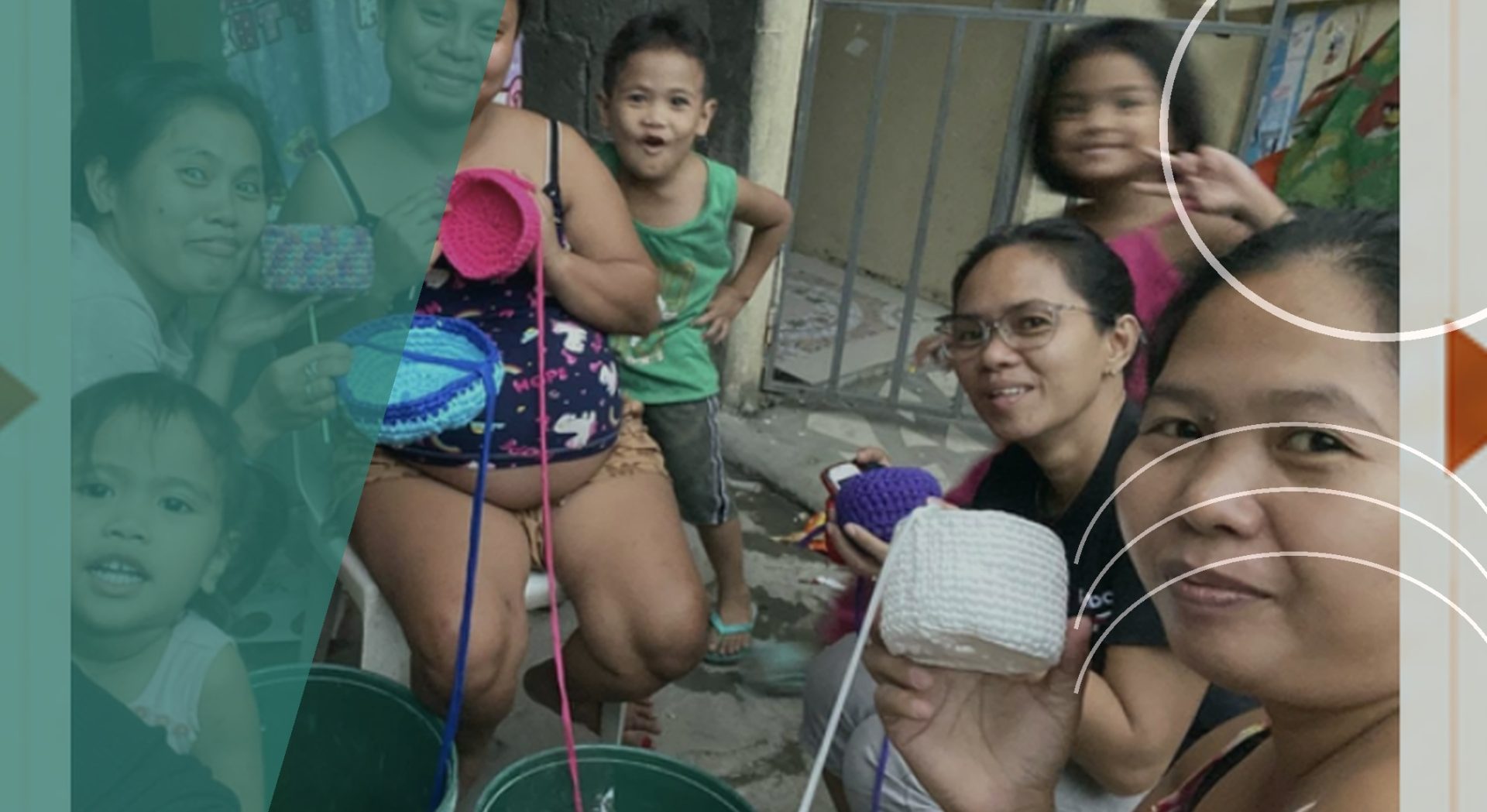
Reusable textiles can be prepared and matched with community makers for cutting, sewing, weaving, redesign, and product assembly. Outputs may include bags, mats, pouches, home products, corporate gifts, and customized orders.
We are developing records for material intake, weight, condition, sorting result, recovery destination, products made, community participation, and livelihood payouts. Reporting supports partner transparency and future ESG requirements without overstating unverified outcomes.
Damaged and non-reusable textiles require pathways beyond handcrafted upcycling. Project Pilipinas plans to test shredding, material preparation, insulation, partition, panel, stuffing, and BRIXFab applications with technical and research partners.
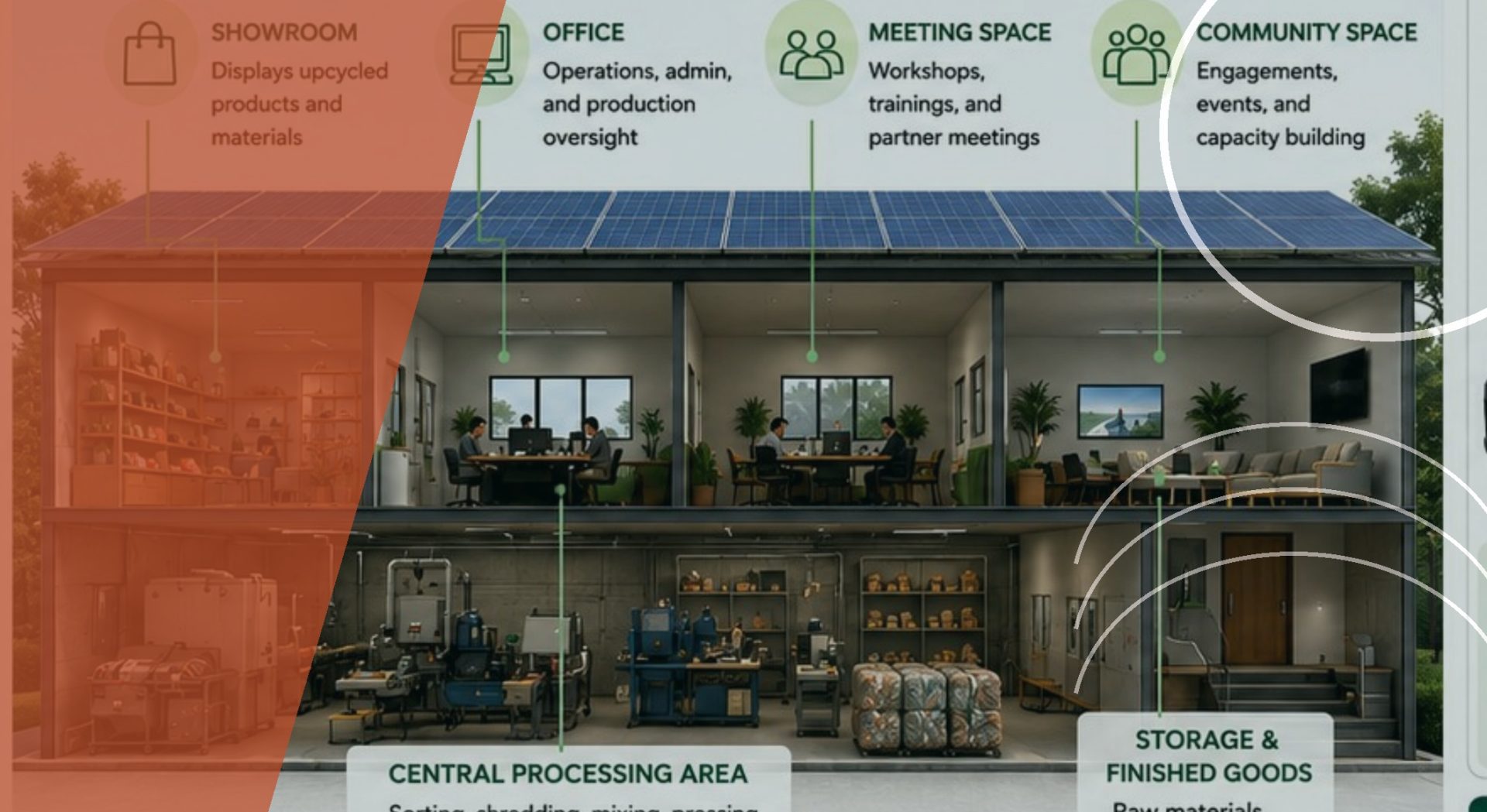
Our approach connects material recovery with community livelihood and practical reporting. Instead of treating collection, production, and impact as separate activities, Project Pilipinas is designed to manage them as one coordinated system.
Why the model is different
Partner-specific recovery plans
We assess the type, condition, volume, location, branding concerns, collection frequency, and desired outputs before recommending a pathway.
Reuse-first, two-pathway model
Usable textiles are prioritized for higher-value community upcycling, while damaged materials are reserved for documented recycling or material-development pathways.
Community value with traceability
The system is designed to show where materials went, what value was created, and how partner participation supported communities and reduced waste.
Explore detailed textile recovery guides
Use these practical resources to prepare materials, plan partnerships, understand reporting, and choose the right Project Pilipinas pathway.