Textile Waste in the Philippines: Available Data, Challenges, and Solutions
A source-based guide to what is known about Philippine textile waste, why national figures remain limited, how older estimates should be interpreted, and which recovery pathways are currently emerging.

Textile waste is broader than discarded clothing
Textile waste includes more than unwanted clothes. It may include household garments, company uniforms, linens, curtains, fabric offcuts, production scraps, deadstock, returns, damaged textile products, accessories, and mixed-fiber materials. These streams are generated by households, institutions, retailers, manufacturers, hotels, hospitals, schools, offices, and events.
Reliable national textile-waste data remains difficult to compile because textiles may be recorded under municipal solid waste, commercial waste, industrial waste, donations, resale, informal reuse, or general residuals. Collection and disposal figures also do not automatically show how much material was repaired, reused, resold, donated, upcycled, recycled, burned, exported, stored, or landfilled.
Definitions that improve textile-waste reporting
Clear definitions prevent collection, donation, upcycling, recycling, and diversion from being treated as the same outcome.
| Term | Practical meaning | Common reporting mistake |
|---|---|---|
| Textile waste generated | Textile material that a household, company, institution, or production process no longer intends to use in its current form | Treating every generated item as immediately disposed or landfilled. |
| Textile collected | Material received by a collection program, organization, facility, or informal collector | Reporting collected weight as recycled or diverted before the destination is confirmed. |
| Direct reuse | A textile continues to be used with little or no material transformation | Excluding resale, hand-me-downs, repair, and donation from the circularity discussion. |
| Repair or alteration | The textile remains substantially the same item but is restored or adapted for continued use | Counting repair as recycling rather than a higher-value life-extension activity. |
| Upcycling or repurposing | A textile is redesigned or converted into another useful product | Assuming all collected textiles are technically or economically suitable for handcrafted production. |
| Material recycling | Textiles are processed into fiber, nonwoven material, yarn, composite feedstock, filling, or another material input | Using “recycling” as a general label for donation, collection, storage, or planned processing. |
| Diversion | Material is kept away from disposal through a documented next use or processing route | Counting material that remains in storage or has no verified destination. |
| Residual textile | Material remaining after sorting or production without a confirmed available pathway | Removing residuals from reports or describing them as future recycling without evidence. |
What available Philippine sources currently show
The strongest public figures require careful interpretation because they represent different dates, scopes, and evidence.
| Data point | What the source states | How it should be used |
|---|---|---|
| Textile share of municipal solid waste | A PTRI FOI response cited a survey period from 2008 to 2013 in which textiles represented approximately 1.61 percent of municipal solid waste | Use only as an older composition estimate and state the represented period. |
| Estimated annual textile waste | PTRI cited an estimate of approximately 267,711 metric tons per year based on 16,628,026 tons of annual municipal solid-waste generation | Do not present as a current measured 2026 figure. Explain that it was calculated from older municipal-waste data. |
| National recycling capacity | PTRI stated in a 2025 FOI response that textile recycling in the Philippines is still emerging | Describe technical pathways as developing and avoid implying broad nationwide capacity. |
| Mechanical recycling processes | PTRI identified shredding, opening, carding, nonwoven production, and possible spinning back into yarn as relevant processes | These are process categories, not proof that every textile has access to a local commercial facility. |
| Quezon City circularity program | Quezon City established a local program and circularity hubs for collection, sorting, repair, repurposing, recycling, and livelihood | Use as a local government example, not as a national coverage claim. |
| Project-level recovery records | Organizations such as Project Pilipinas can measure their own material intake, sorting, use, production, payments, and residuals | Project data should be identified by organization, location, reporting period, and methodology. |
Why national textile-waste data remains limited
Waste categories are combined
Municipal reports may place textiles inside broad residual, commercial, or special-waste categories, limiting visibility by textile type and source.
Informal reuse is difficult to measure
Hand-me-downs, neighborhood resale, repair, ukay-ukay activity, household repurposing, and informal collection may extend textile life without appearing in formal waste data.
Corporate textiles are rarely separated
Uniforms, linens, curtains, samples, promotional shirts, and office textiles may be reported through procurement or disposal systems rather than a textile-specific dataset.
Fiber blends complicate recovery
Polyester-cotton blends, elastane, coatings, foam, adhesives, prints, zippers, and mixed accessories affect reuse, shredding, separation, and end-market options.
Collection is easier to count than outcomes
A collection event can record bags or kilograms, while downstream sorting, use, storage, rejection, and residuals require longer tracking.
Definitions are inconsistent
Donation, reuse, repurposing, upcycling, recycling, recovery, and diversion are often used interchangeably even though they describe different activities.
A practical hierarchy of textile-waste solutions
Prevent unnecessary textile demand
Improve procurement planning, product durability, uniform issuance, inventory control, design specifications, and care guidance before waste is created.
Extend useful life
Prioritize maintenance, repair, alteration, resale, redistribution, swapping, rental, and continued use when the item remains safe and functional.
Collect by defined textile stream
Separate uniforms, linens, offcuts, deadstock, wearable garments, contaminated material, and non-textile accessories instead of mixing everything.
Sort according to a real next use
Classify by condition, fiber, dimensions, branding, contamination, market demand, and available reuse, production, or technical capacity.
Support community upcycling selectively
Match suitable material with tested products, real buyers, maker skills, equipment, production planning, fair payment, and quality control.
Develop technical recycling capacity
Research and invest in shredding, fiber opening, carding, nonwovens, yarn, insulation, filling, panels, and other applications with material testing and end markets.
Track destinations and residuals
Measure what was received, reused, processed, produced, returned, rejected, stored, and left without a route.
Publish transparent results
State the reporting period, measurement method, assumptions, boundaries, source links, and limitations alongside positive outcomes.
Emerging technical recycling pathways
Reuse, repair, and redistribution often preserve more of a textile’s original value than immediate material processing. Upcycling can create useful products and community income, but it is constrained by material quality, product design, labor, equipment, storage, quality control, and market demand.
Mechanical recycling can expand the options for damaged material. In an official FOI response published in 2025, the Philippine Textile Research Institute identified shredding, opening, carding, nonwoven production, and possible spinning into yarn as relevant textile-recycling processes. PTRI also described the field as emerging and noted ongoing work on mechanical recycling of post-industrial waste.
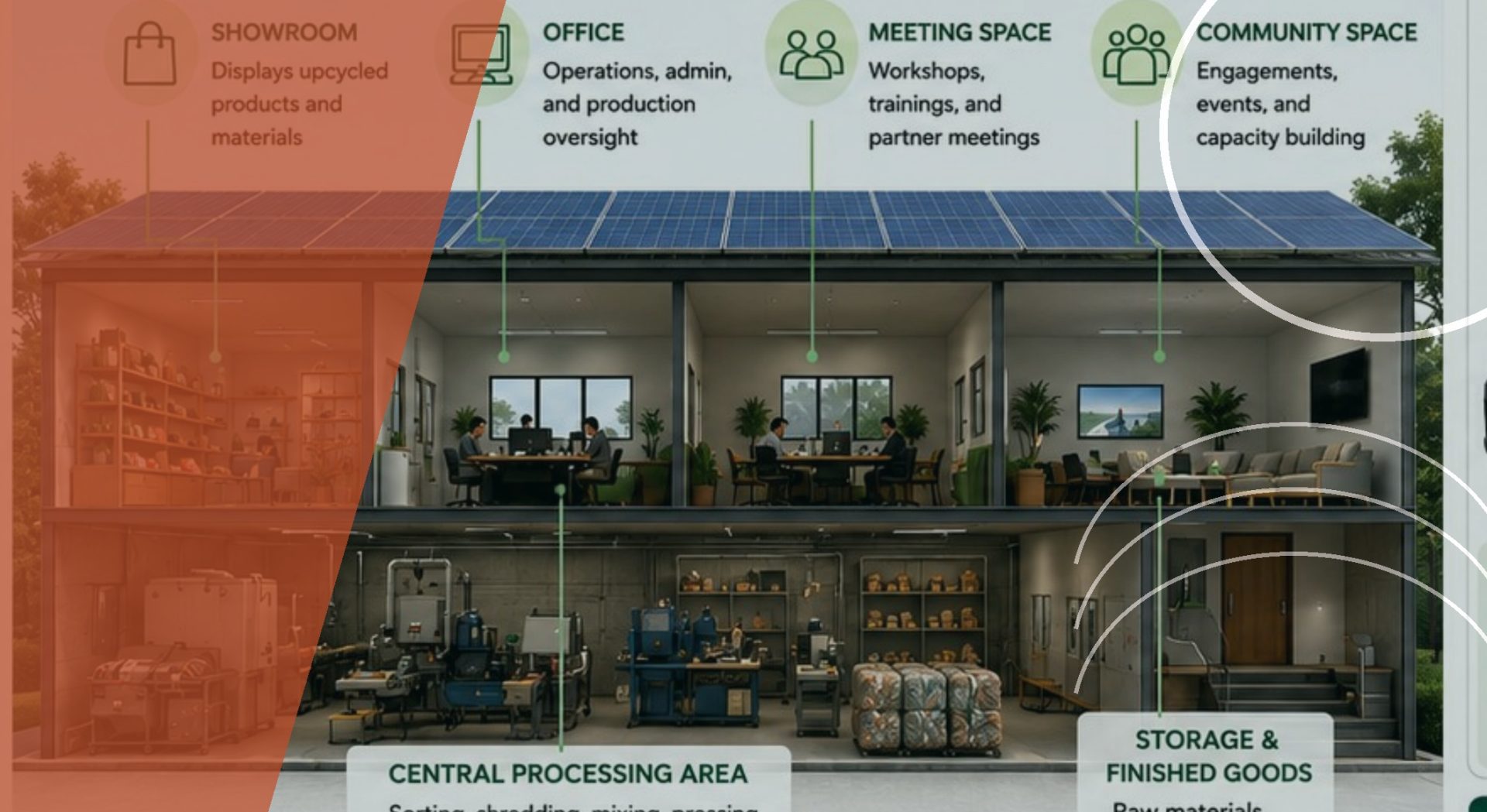
How an organization can measure its own textile stream
| Project record | Recommended method | Example limitation to disclose |
|---|---|---|
| Material source | Identify organization, site, textile stream, and collection period | Source categories may be confidential or combined in a public report. |
| Weight | Use a calibrated scale and record gross, packaging, and net weight where possible | Some projects may have only count data or estimated weights. |
| Condition | Apply documented categories such as wearable, repairable, upcyclable, technical-processing candidate, contaminated, or residual | Condition judgments may vary unless sorters use the same definitions. |
| Destination | Record the named recipient, process, product order, or facility and the date of transfer or use | A planned destination is not a completed outcome. |
| Product output | Record products completed, rejects, recovered material used, and supporting components | Product weight may not equal intake weight because of offcuts and added materials. |
| Livelihood activity | Record work completed, period, maker group, and gross production payment | Gross production payment is not the same as net household income. |
| Residuals | Weigh or record material remaining after sorting and production | Some small offcuts may require estimation if direct weighing is impractical. |
| Public claim | Link each claim to a defined metric and reporting boundary | Do not use “zero waste,” “100 percent recycled,” or national-scale language without evidence. |
Primary public sources used for this guide
Philippine textile-waste estimate
The Philippine Textile Research Institute FOI response on textile-waste status states that an older survey found textiles represented about 1.61 percent of municipal solid waste and produced an estimated 267,711 tons per year. The same response says the underlying data is outdated.
Textile-recycling processes
A later PTRI FOI response on machinery and processes identifies shredding, opening, carding, nonwoven production, and spinning as relevant processes and describes Philippine textile recycling as emerging.
Quezon City local example
The Quezon City Government’s textile-circularity announcement describes a local program involving collection, sorting, repair, repurposing, recycling, circularity hubs, and livelihood.
QC Textile Circularity Hub
The city’s official hub page describes the QC and ANTHILL facility in Payatas, its weaving and production functions, training, and community livelihood objectives.
Textile-waste data questions
The answers distinguish older estimates, current local programs, and project-level measurement.
A commonly cited PTRI response gives an estimate of approximately 267,711 metric tons per year, but it was calculated from older municipal-solid-waste data and was explicitly described as outdated. It should not be presented as a current direct measurement.
The same older source cited approximately 1.61 percent of municipal solid waste during a survey period from 2008 to 2013. This is not a current nationwide composition measurement and does not cover every commercial or industrial textile stream.
No. Wearable items may be better suited to reuse, repair, resale, swapping, or donation. Damaged garments may contain blended fibers, elastane, coatings, prints, foam, zippers, and contaminants that limit technical recycling.
Upcycling or repurposing redesigns a textile into another useful product while keeping much of the material structure. Recycling processes the textile into fiber or another material input. Both differ from direct reuse and repair.
It may extend useful life when the clothing is suitable, accepted, redistributed, and actually used. Donation alone does not prove the item was reused, and unsuitable donations can transfer sorting and disposal costs to the recipient.
Textiles move through households, informal resale, donation, manufacturing, commercial disposal, municipal waste, storage, and multiple recovery activities. Definitions and reporting boundaries are not consistent across these systems.
PTRI has identified shredding, opening, carding, nonwoven production, and possible spinning into yarn as relevant processes. Availability, scale, material specifications, commercial access, and end markets must be confirmed for each project.
The intended method records source, weight or count, condition, sorting result, destination, product output, community production, payments, residuals, and limitations. Materials are not counted as diverted merely because they were collected.
Related Project Pilipinas resources
Turn textile-waste data into a practical recovery plan
Project Pilipinas works with partners to assess specific textile streams, define realistic pathways, document outcomes, and make limitations visible.